
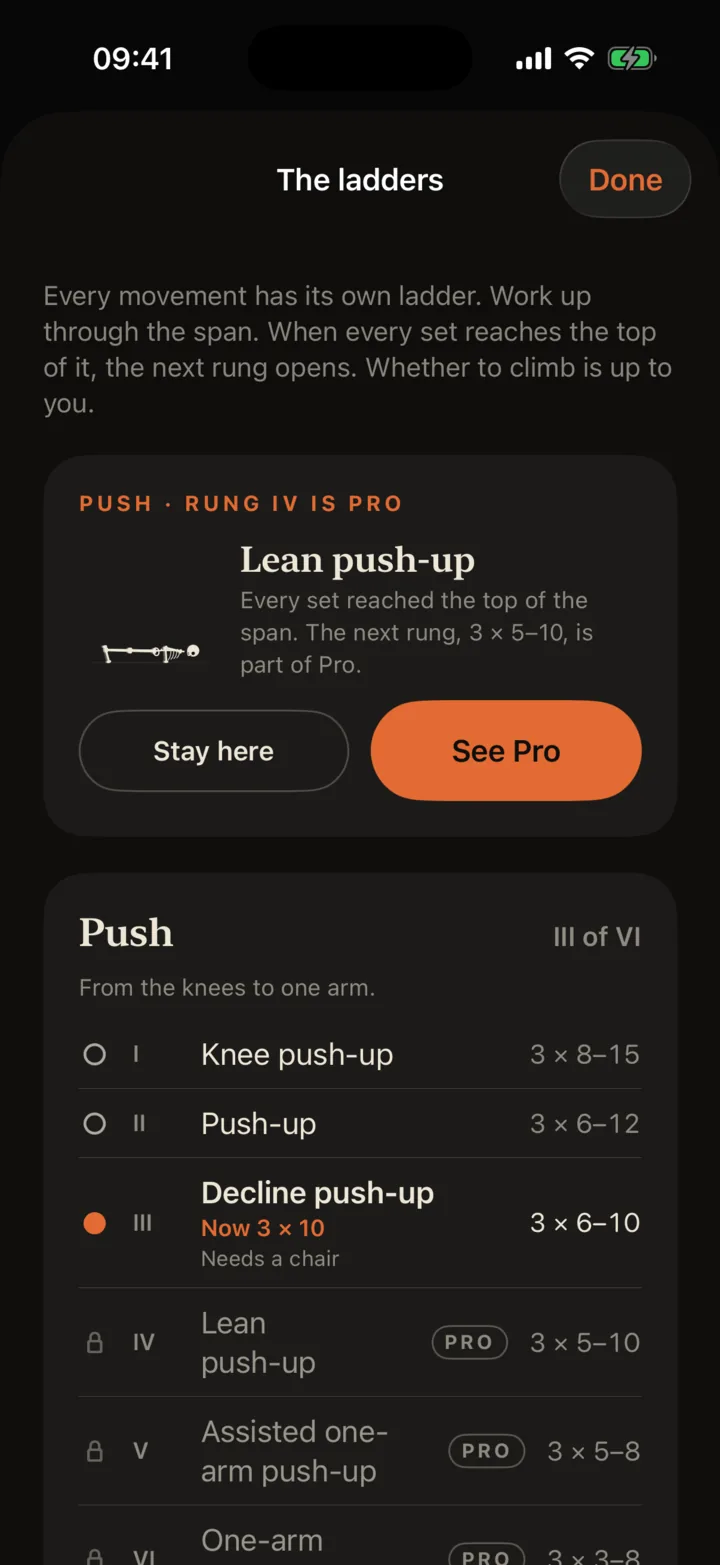
Ready to climb: Push.
The ladders
You always know where you stand
Each ladder shows the rung you are on, the span you are working in, and what comes next. Choose any open rung yourself, up or down. Rungs you earn by climbing stay open.
Coming to the App Store · iPhone
Memento Soma is bodyweight training at home, with a chair, a wall and a bar if you have one. A skeleton does every exercise with you. Every movement has its own ladder, from the plain form to the hard one, and you climb when every set reaches the top.
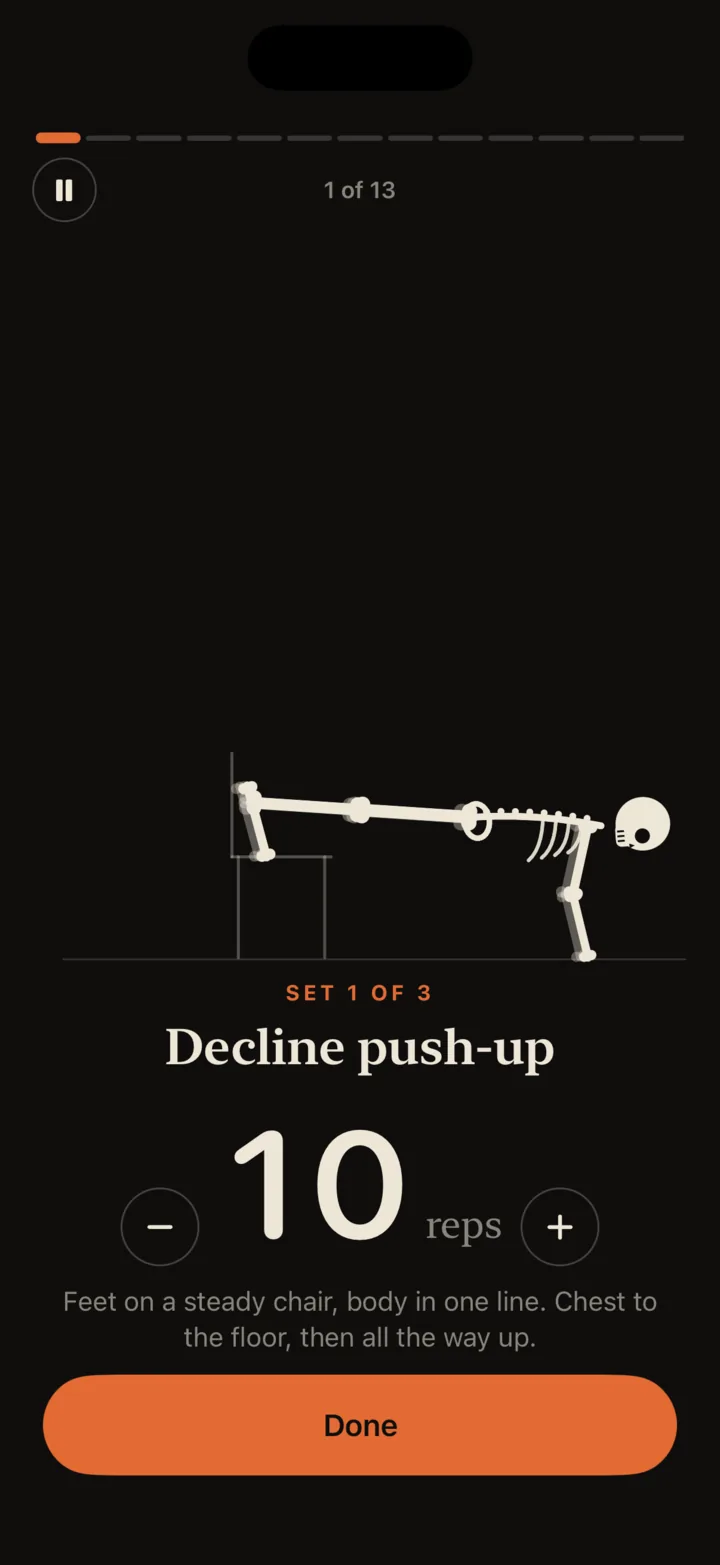
Set 1 of 3. The skeleton has done this before.
How it works
Progress is a harder version of the same movement, not more of it. From knee push-ups to one arm. From squats to the pistol.
Every rung has a span, say 3 × 6–10. Start low and add a rep when you can.
When every set of a session reaches the top of the span, the rung is done.
The next rung is offered. Climb, or stay a while. Either is right.
From the knees to one arm.
Ready to climb: Push.
The ladders
Each ladder shows the rung you are on, the span you are working in, and what comes next. Choose any open rung yourself, up or down. Rungs you earn by climbing stay open.
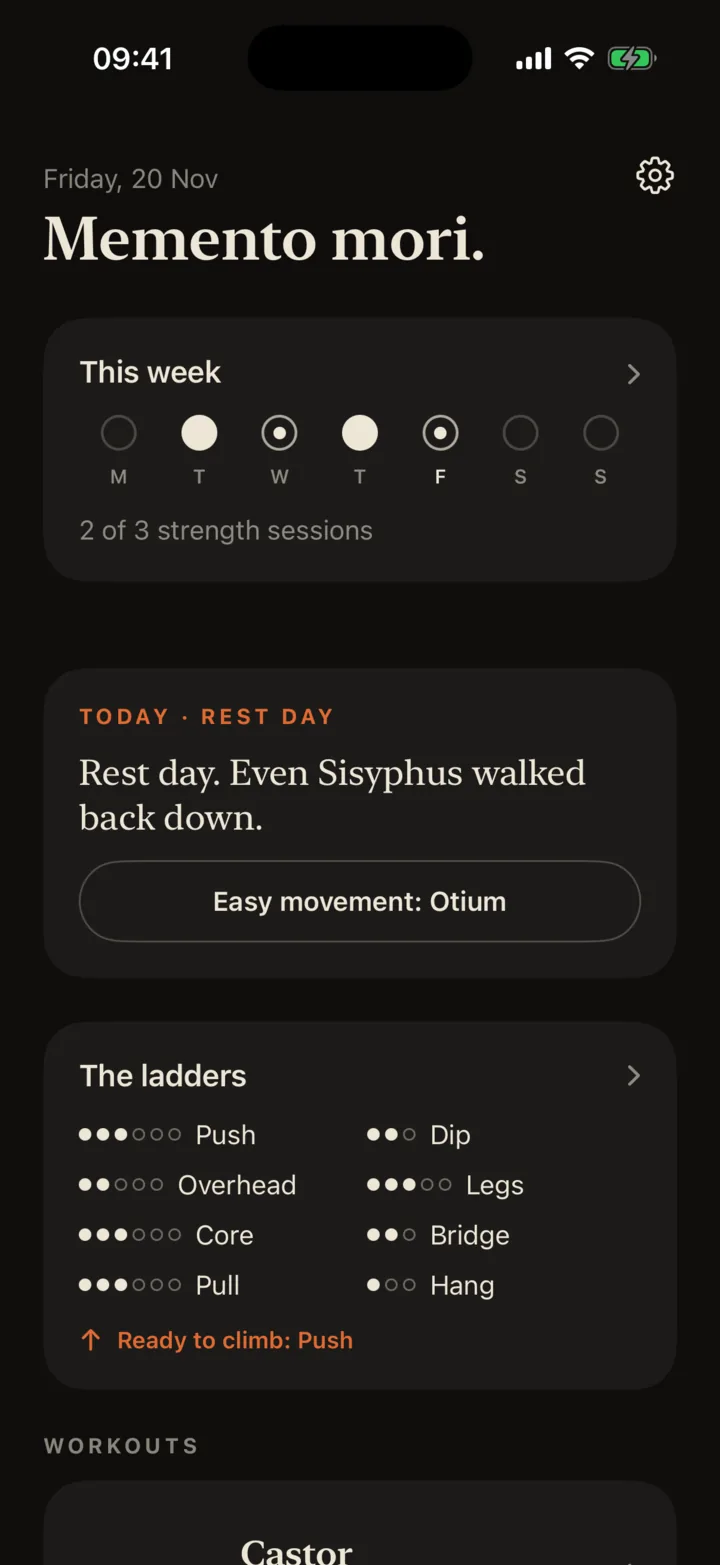
Rest day. Even Sisyphus walked back down.
The week
Castor and Pollux, the twins, take turns, three days a week unless you choose otherwise, and are built from wherever you stand on each ladder. Between strength days it suggests rest, or something easy.
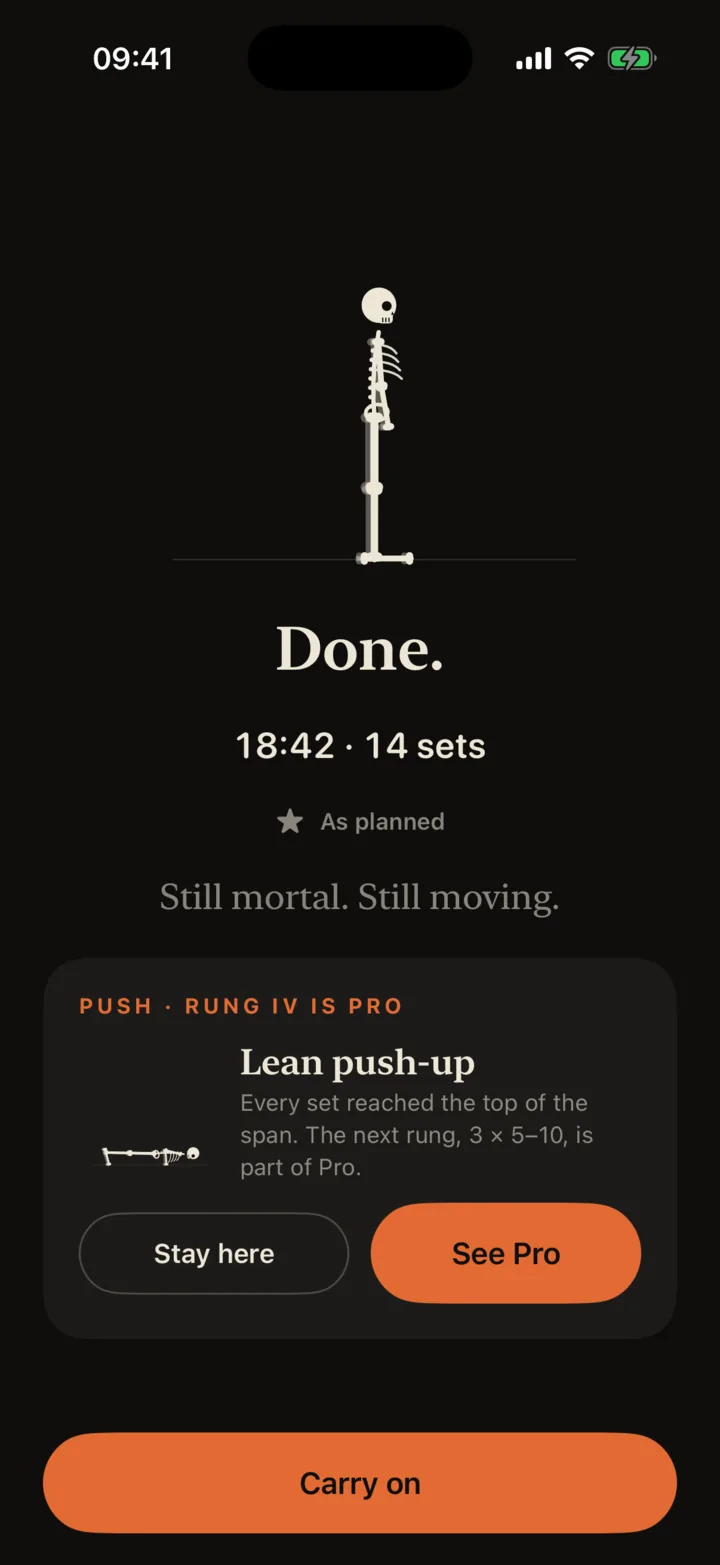
Still mortal. Still moving.
The offer
When every set reaches the top of the span, the next rung is offered after the session. Climb, or stay. Staying is a full answer; it asks again the next time you get there. Above the free rungs, the next one is part of the purchase.
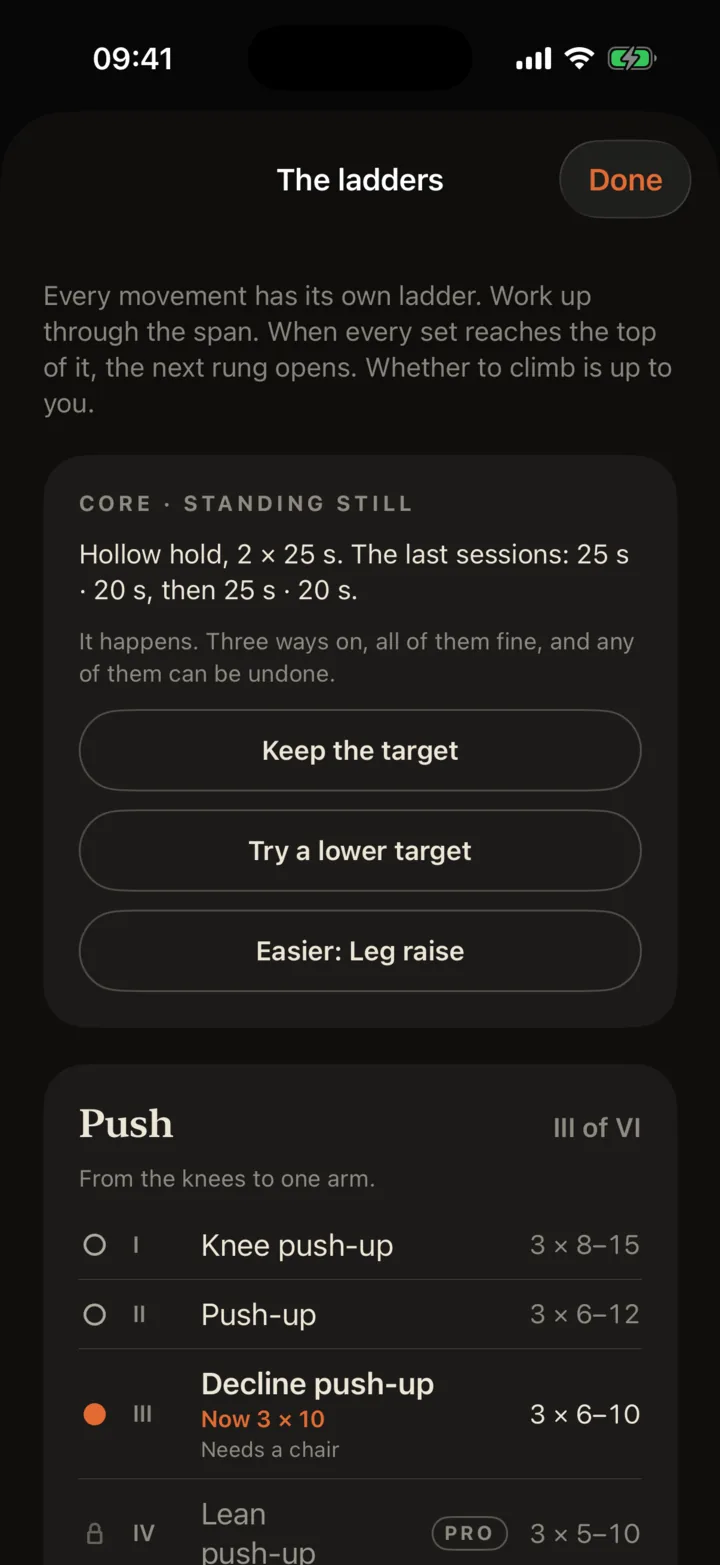
It happens. Three ways on.
Standing still
Three comparable sessions without the numbers moving, and it says so, with up to three ways on: keep the target, try a lower one, or step to an easier variant for a while. Lowering or stepping back can be undone. You can turn the advice off.
Training as attention
Look for the self long enough and you can forget it has knees. The looking goes better in a body that works: fed, strong, and able to sit still without complaining about it.
And the training is practice in itself. Thirty seconds in a hollow hold is plenty of time to notice who wants it to stop. Count the reps, feel the floor, watch the one who is watching. Nothing to become. Ten more seconds.
The looking itself lives at NirvanaNuke →What it costs
Free, for good
One purchase
No subscription, no trial that turns into one. Apple shows the price in your currency. Rungs you earn by climbing stay open whatever you decide.
Your workouts, your history and where you stand on the ladders are stored on your iPhone, not on a server. They travel only where you send them: your own device backup, or an export you make. No sign-up, no analytics, no ads. The privacy policy is short, because there is little to say.
A floor, a steady chair and a wall; a second chair for the hardest dip. A bar to hang from opens two more ladders, Pull and Hang. Without one, Pollux swaps them for legs and core on the floor.
Then start at the bottom. The push ladder begins with knee push-ups, the legs with plain squats, and the very first workout is thirty seconds of marching on the spot. You can choose any open rung yourself, up or down.
No. Most of the app is free for good. One purchase, paid once, opens the hardest rungs and the rest of the named workouts. Apple shows the price in your own currency.
No. Your training is stored on your iPhone, not on a server. There is no sign-up, no analytics and nothing to log in to.
Memento Soma is on its way to the App Store. This page will have the link the day it is there.
No. Stop if something hurts. If you have heart, joint or balance problems, are pregnant, or aren't sure you should train, ask a doctor first.
Coming to the App Store · iPhone